
 Is Your Dog on Santa's Naughty or Nice List?
 Light Up Dog Collar Guide: Safer Walks After Dark
 Dog Halloween Costumes Made Easy: Personalised Dog Collars and Bandanas
 Why a Personalised Dog Collar Makes the Perfect Gift
 Signs of Arthritis in Dogs: What Every Owner Should Know When the Temperature Dr
How to Clean Muddy Dog Paws After a Walk (and Keep Them Healthy All Winter)
There's a particular kind of chaos that arrives as winter sets in. The days get shorter, the ground gets muddier, and your dog discovers that every path between here and the field has quietly turned into a mud slick overnight. One minute they're charging ahead, genuinely delighted with life. The next, you're standing at the door staring at four paws that have brought approximately half the park indoors with them.
Dog paw cleaning after a muddy walk is something most owners do some version of, but doing it properly makes a real difference to your dog's health, your floors, and the general state of your upholstery. Here's what actually works, and a few things worth knowing that most guides tend to skip.
Why dirty dog paws need more than a quick towel
Mud looks fairly harmless, but it's not just dirt. By winter, paths carry far more than soil. Mud can hold bacteria, fungi, and traces of pesticide residue from treated lawns and fields, and woodland walks introduce additional risks as moisture and debris collect between the toes. Thorough post-walk cleaning is genuinely worthwhile.
There's also the knock-on effect of your dog licking their own paws. Left unchecked, dirty paws contribute to skin irritation, yeast infections, and persistent soreness between the toes. A consistent post-walk cleaning routine is not excessive. It's just sensible, and it gives you thirty seconds to check that nothing unpleasant is lodged in there.
Set up a paw-cleaning station before you go
The single biggest change you can make to your post-walk routine is being ready before your dog reaches the door. A proper cleaning station doesn't need to be elaborate. A hook for the lead, an absorbent mat, and a few supplies kept together is enough.
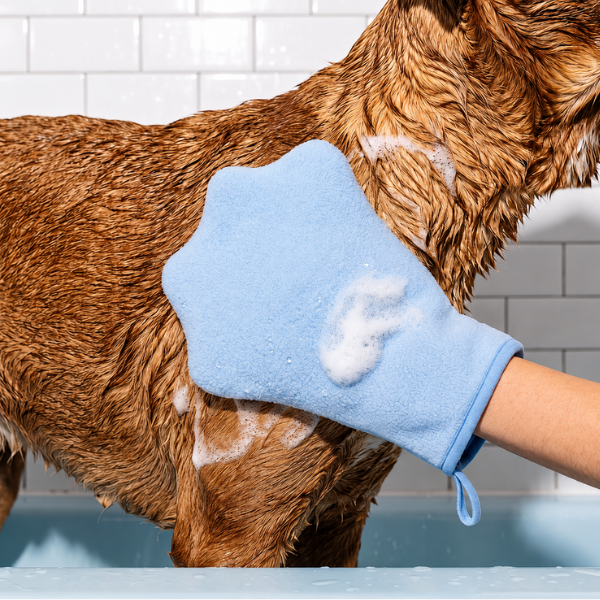
What to have ready:
- A microfibre pet glove towel (the glove shape gives you far better control around paws and between toes than a flat old towel)
- A shallow bowl you can fill with warm water when needed
- Hypoallergenic cleaning wipes, great for lighter days when a quick wipe is genuinely all that's needed
- A lick mat ready with a small smear of peanut butter (more on this below)
- Paw balm for afterwards
If your dog comes in through the back or a utility room, keep everything there. Once your dog gets used to stopping in the same spot, the routine becomes quicker. Most dogs settle into it. They start to understand that this is simply what happens after walks, especially once positive associations are in place.
How to clean muddy dog paws: the step-by-step
For most muddy walks, a thorough paw clean is enough. No full bath required.
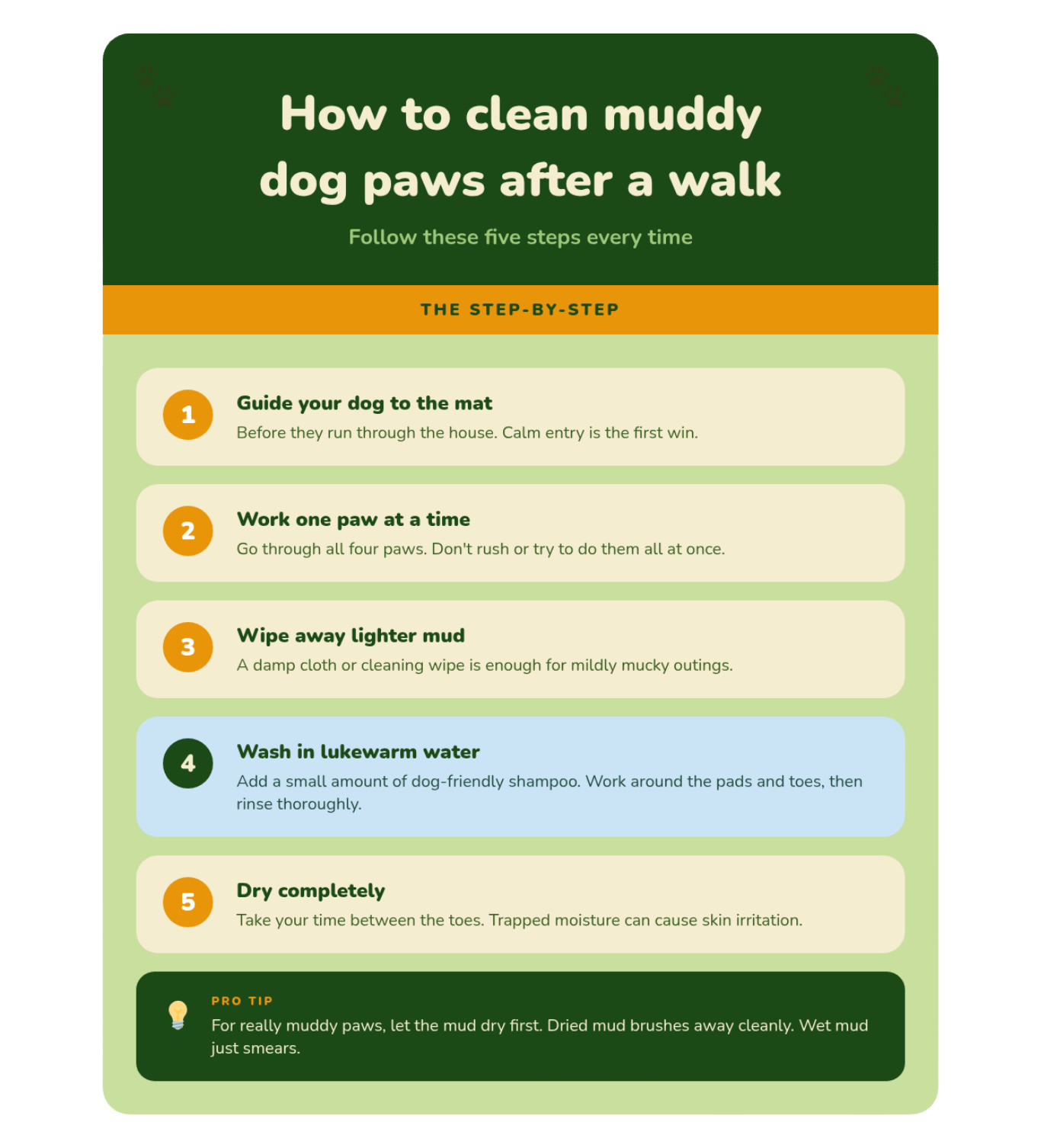
- Guide your dog to the mat before they run through the house. Calm entry is the first win.
- Work through one paw at a time. Don't try to do all four at once or rush the process.
- For lighter mud: use a damp cloth or a cleaning wipe. A quick wipe across each paw removes surface dirt and is enough on mildly mucky outings.
- For proper mud: fill a shallow bowl with lukewarm water. Place each paw inside for a few seconds, then work a small amount of dog-friendly shampoo around the pads and between the toes. Rinse thoroughly, as shampoo residue left behind can cause discomfort and skin irritation.
- Dry completely. This is the step most owners rush, and it matters. Moisture trapped between the toes can cause persistent itching, redness, and recurring skin issues. Take the time to dry properly, not just the surface.
If your dog genuinely refuses to stand still for any of this, dog shoe socks or waterproof booties are worth trying on the muddiest days. They reduce what comes in significantly, though most dogs need a bit of patience and practice before they'll tolerate them without a fuss.
The tip most owners get wrong: dry first, then brush
If your dog comes back caked in proper, deep mud, the instinct is to rinse it all off straight away. It's usually better to wait.
Wet mud smears. It spreads across the floor, works deeper into the coat, and becomes a much bigger problem than it started. Dried mud, on the other hand, goes brittle and flakes away cleanly.
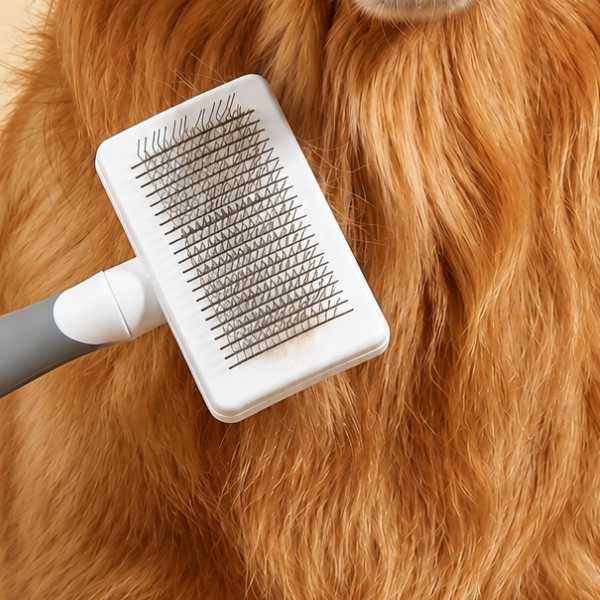
When you get home, guide your dog to a washable mat or the utility room and let the mud air-dry for 20 to 30 minutes. Then use a self-cleaning slicker brush to work through the bulk of it before you introduce any water. You'll find there's far less stubborn dirt left to actually wash away.
This makes a particular difference for dogs with longer coats (spaniels, retrievers, doodles) where wet rubbing creates tangles that take twice as long to sort out afterwards.
Don't skip the toes and pads
The top of the paw is the easy part. The real paw cleaning happens between the toes and pads, which is exactly where mud, grit, grass seeds, and moisture collect and stay.
After cleaning the main surface, work carefully into each gap with a damp cloth or the edge of your towel. If your dog has been through long grass or woodland, check specifically for grass seeds, which can hide in damp fur and work into the skin if missed. Your dog pulling away, licking persistently, or limping after a walk are signs worth paying attention to.
For dogs with hairy feet, a light trim between the toes every few weeks, either by a groomer or carefully at home, reduces how much mud clings in the first place and makes every clean-up easier.
Does every muddy walk need a full bath?
No. A full bath is only really needed if your dog has rolled in something genuinely foul, mud has worked deep into the coat (rather than just the paws and lower legs), or they've waded through particularly dirty standing water.
For everything else, a paw clean, a towel-dry of the legs and belly, and a brush once the mud has dried is enough. Bathing too often strips the natural oils from your dog's coat, and as the colder months set in, keeping that coat in good condition matters more than ever.
When you do need a proper wash, use a dog-friendly shampoo suited to your dog's coat type, and rinse thoroughly. Different coat types have different needs, so it's worth knowing what works for yours before the season gets going.
Make paw-cleaning a positive experience
Some dogs are completely unbothered by having their paws handled. Others treat it like a mild catastrophe.
For the second group, a lick mat is one of the best tools you can have. Spread a thin layer of peanut butter or soft cream cheese on it before you start, and your dog has something to concentrate on that isn't what you're doing to their feet. Over time, this builds a positive association: paw-cleaning becomes the thing that comes before peanut butter, which is a very easy sell for most dogs.
If your dog genuinely resists paw handling, start slowly and away from the walk routine: touch the paw briefly, reward, release. Build up to holding the paw, then a wipe, then the full process. Patience up front makes every muddy adventure afterwards significantly calmer.
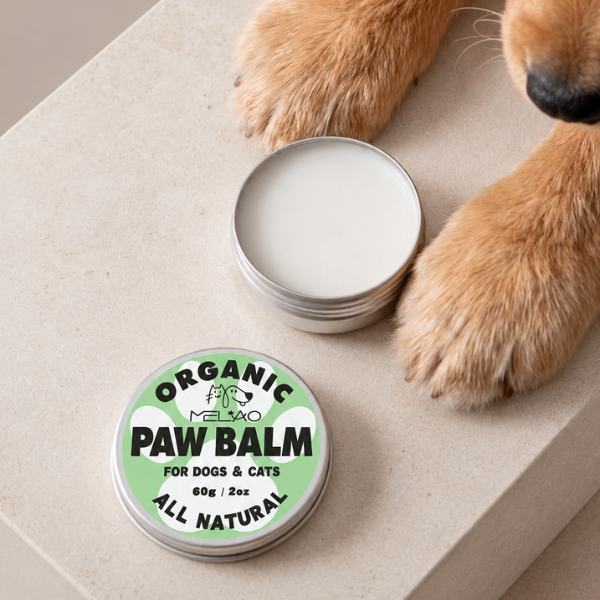
Once you're done cleaning, apply a thin layer of organic paw balm to the pads. Winter walks on wet ground dry out paw pads over time. A moisturising balm keeps them supple and comfortable heading into the months when it really matters.
While you're at it, check the tag
One small thing worth adding to your post-walk routine as the season changes: give your dog's ID tag a quick look.
Mud works into engraving fast, and after a handful of wet winter walks, the details on a tag can become difficult to read, which is exactly when a legible tag matters most. As the evenings draw in and walks push into dusk, a dog who gets spooked and bolts needs a clear, up-to-date ID tag to find their way home.
A personalised engraved dog tag takes seconds to wipe clean with a damp cloth. While you're drying those paws, make it a habit to check the engraving is still sharp and the phone number is still correct. If the details have changed, or the engraving has worn, the start of winter is the right moment to replace it before muddy season really sets in.
Muddy walks are part of the deal when you own a dog. A simple routine (mat, wipe, dry, check) makes them genuinely manageable. With the right kit ready by the door and a bit of consistency, your pup can come in from the muddiest adventures and be completely clean, dry, and cosy in under ten minutes.